Shergar
Shergar’s name resonates as loudly now as it did when he was in his pomp nearly half a century ago and today the beloved titan is inducted into British Racing’s Hall Of Fame.
His tale was one of triumph and tragedy, majesty and mystery, heart-stirring and heartbreak. He will be forever remembered as a record-breaking ten-length winner of the Derby plus, sadly, the horse kidnapped from stud during the infancy of his stallion career and never seen again.
It is Shergar’s exploits on the racecourse in 1981 that have earned him his place in the Hall Of Fame.
His jaw-dropping romp at Epsom was followed by two more emphatic Group 1 victories in the Irish Derby and King George VI and Queen Elizabeth Stakes. He won his first five races that year by an aggregate of 4 lengths, underlining that he was operating on a different plane to his peers.
The handsome bay with a distinctive blaze on his face and three white socks was admittedly born with a few advantages in life. He was regally bred by Aga Khan IV, trained by the masterful Michael Stoute and was partnered by two supreme jockeys, Lester Piggott and Walter Swinburn, throughout his eight-race career.
Shergar was foaled on March 3, 1978, at the Aga Khan’s stud farm, Sheshoon, close to The Curragh Racecourse in Ireland. Take A Chance On Me, by ABBA, was No 1 in the charts and would have made a good soundtrack to the foal’s future career on the racecourse.
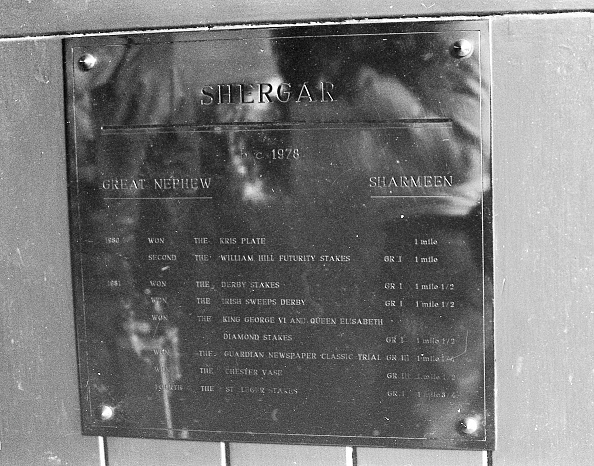
His sire, Great Nephew, was a top miler who had already established himself a leading stallion, with his offspring including Grundy, winner of the Derby and Irish Derby in 1975. And his dam, Sharmeen, was a direct descendant of legendary broodmare Mumtaz Mahal.
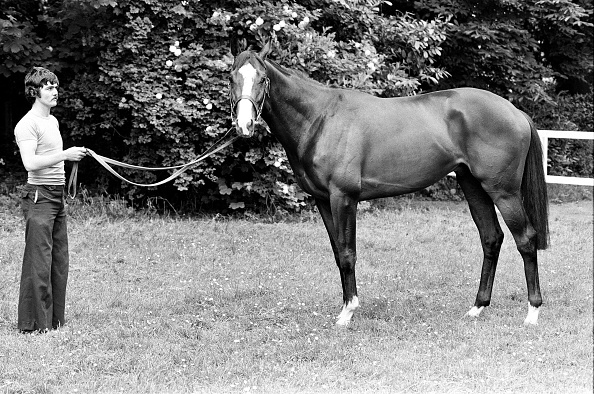
Shergar was apparently a model pupil in his early days and, while he was learning the ropes, Stoute was enjoying a fruitful 1978, scooping the Oaks, Irish Oaks, Yorkshire Oaks and Gold Cup among other races.
The timing was perfect for the ambitious Barbados-born trainer, as the Aga Khan had decided to have horses trained in Britain for the first time that summer, having previously dispatched them to France. He sent yearlings to Stoute and Fulke Johnson-Houghton in 1979, with Shergar sent to the former.
The colt did not make his debut as a two-year-old until September 19 at Newbury the following year, but it was worth the wait. Sent off the 11-8 favourite, with plenty of stable confidence behind him, he made a striking impression as he forged clear in the final two furlongs under Piggott.
He had one more run that year, when runner-up to Beldale Flutter in the Futurity Stakes at Doncaster. Stoute would reveal later that Shergar had worked a little flat in the build-up, although the more experienced winner was no slouch, going on to win the Dante and Juddmonte International the following year.
Shergar made great physical progress over the winter and put down his marker for 1981 by zooming to a ten-length victory under Swinburn for the first time, in Sandown’s ten-furlong Classic Trial in late April. His Derby odds shrunk from 25-1 to 8-1.
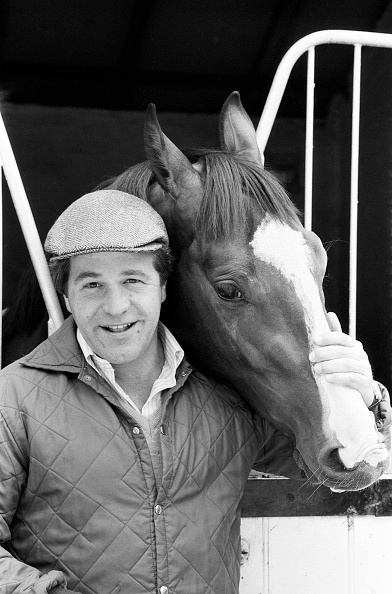
Shergar and trainer, Sir Michael Stoute. 1981.
Less than a fortnight later, Shergar was back in action in the Chester Vase, with connections keen to give their rising star some experience of tackling a left-handed bend. The well-balanced colt with a short but economical stride went round it like a greyhound and dished out another drubbing, this time by 12 lengths.
By the time of the Derby, a month later, the betting public only wanted to know the horse with a big white face who had a penchant for trouncing opponents. He was sent off 10-11 favourite despite facing 17 rivals on unseasonably soft ground.
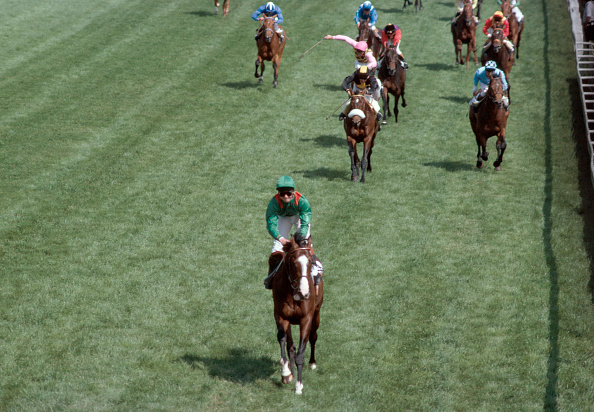
His supporters never had an anxious moment. Swinburn soon had him travelling easily behind the leaders, Riberetto and Silver Season, and after negotiating Tattenham Corner invited him to exhibit all his speed and stamina.
Shergar needed no second invitation and galloped effortlessly clear. Commentator Peter Bromley could not contain his excitement: “Two furlongs out, the Derby is a procession . . . there’s only one horse in it. You need a telescope to see the rest. They have a furlong to go and Shergar is galloping them into the ground.”
The winning distance of ten lengths in the 202nd running of the iconic race was without equal, before or since, and would have been considerably more had Swinburn not stood up in the irons and began pulling up, even having time to give his partner a celebratory pat down the neck near the finish. The young rider estimated later that he could have won by 20 lengths.
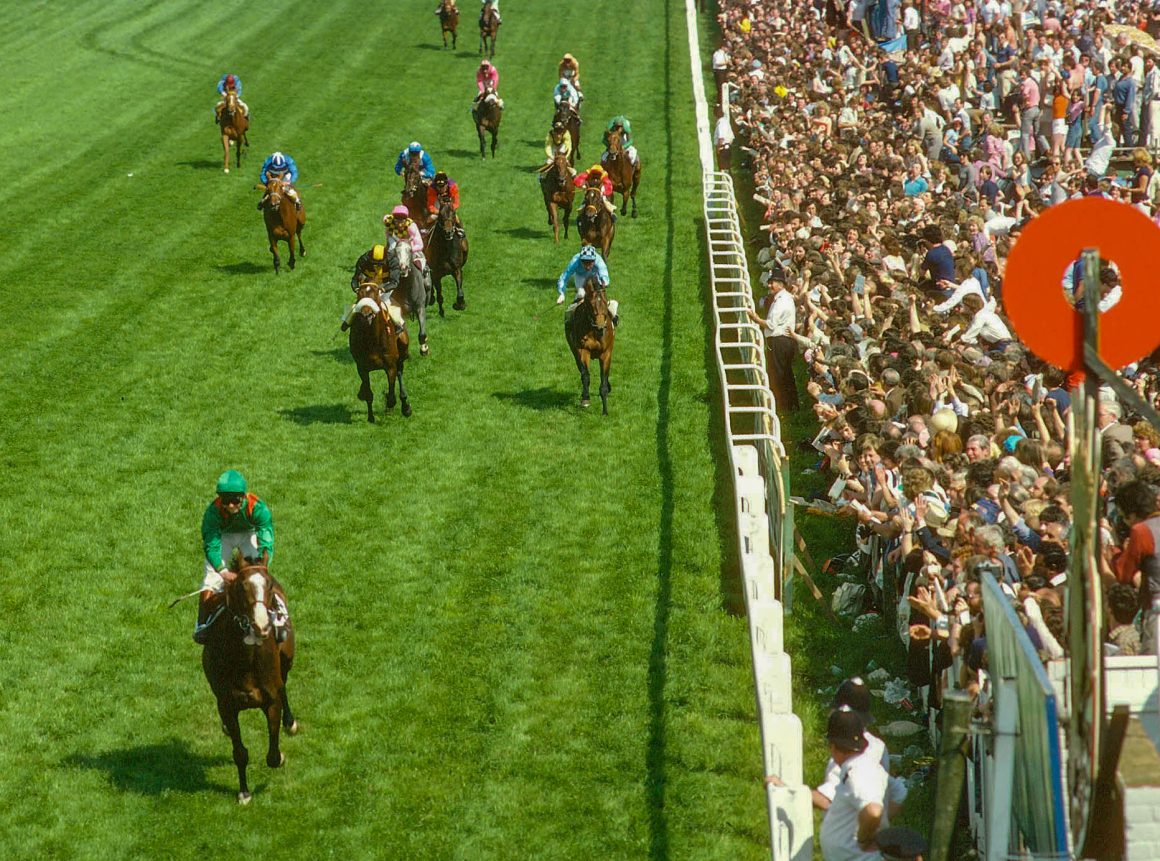
Shergar, ridden by Walter Swinburn, enroute to winning the Epsom Derby by ten lengths, the largest margin in the history of the race to date (2026).
Glint Of Gold, easy winner of the Italian Derby the previous month, came from well off the pace to chase him home, with his jockey, John Matthias, left in something of a daze at the finish. “I thought I had won,” he said. “Shergar had gone so far clear I didn’t see him.”
A group of owners in America had not missed the spectacular winner and offered about £27 million (the equivalent of about £135 million nowadays) to syndicate him. The Aga Khan rejected the bid, partly because he wanted his wonder horse to stand as a stallion in Ireland.
He instead syndicated Shergar for £10 million, selling 40 shares at £250,000 each. He kept six for himself and the others were sold to buyers from around the world.
Meanwhile, Shergar was getting his own kicks for free on the Newmarket gallops. Twelve days after winning the Derby, he threw his rider and ran off. He was caught five miles away, unharmed, by fireman Andy Sheldrick.
“A horse ran right out in front of me near the Boy’s Grave [a well-known landmark in Newmarket],” Sheldrick told Suffolk News. “I had to do an emergency stop and nearly hit him. I thought I better try and get hold of him otherwise there will be an accident so, as he trotted off up the road towards Moulton, I drove very slowly after him. He seemed very calm and after a while he stopped to have a munch on a bush. I pulled up, got out of my car, and grabbed his reins.”
Back on the racecourse, Shergar was still not for catching.
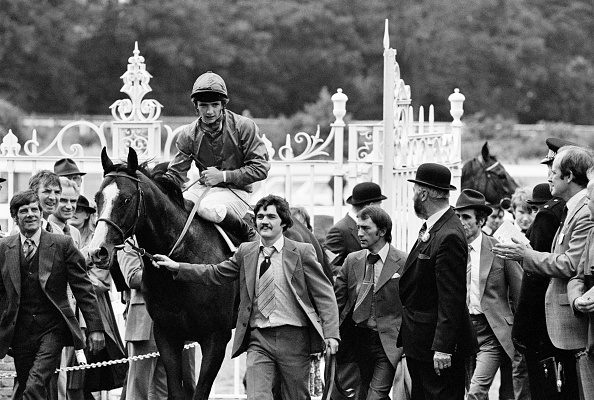
On his next start he won the Irish Derby at The Curragh with a familiar swagger. Reunited with Piggott, as Swinburn was sidelined, the combination cruised to a four-length success over Cut Above. One of the biggest races of the summer ended up resembling a leisurely piece of work. Piggott described Shergar afterwards as the best horse he had ridden. High praise from the legendary rider who would his tenth Champion Jockey title that year.
Sir Peter O’Sullevan was commentating and said: “What an amazingly comfortable triumph for Shergar. He just cantered to the front to win in the impressive style; never even shaken up.”
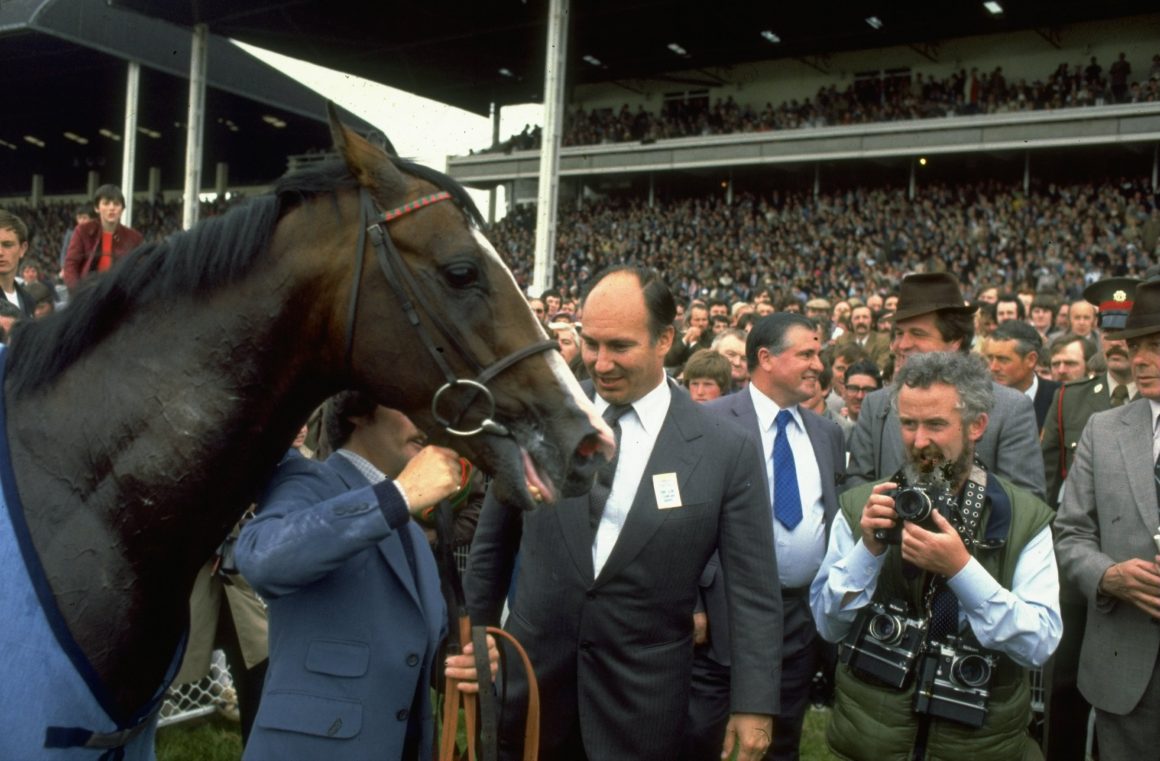
Shergar, pictured with The Aga Khan after cruising to victory in the Irish Derby.
Next stop was an assignment against older horses in the King George at Ascot with Swinburn back on board. Sent off at 2-5, the combination briefly looked in bother turning for home as they sat fourth, stuck in a pocket. But then came a priceless break as Piggott, riding Light Cavalry, moved off the rail. The odds-on favourite grabbed the gap in a flash before motoring four lengths clear of Madam Gay, the French Oaks winner.
Shergar had earned a break, with the Prix de l’Arc de Triomphe his stated end of season aim. Stoute was already assured his first trainers’ championship – he would go on to land nine more – and opted to run him in the St Leger beforehand.
His form claims were outstanding and he went off at 4-11, but the fire which had burned so bright in the first half of the season had suddenly been extinguished. A subdued Shergar finished a weary fourth, beaten 111⁄2 lengths on the testing ground. The winner was Cut Above, who he had previously beaten so easily in the Irish Derby.
Stoute blamed himself, saying he should have withdrawn him because of the conditions.
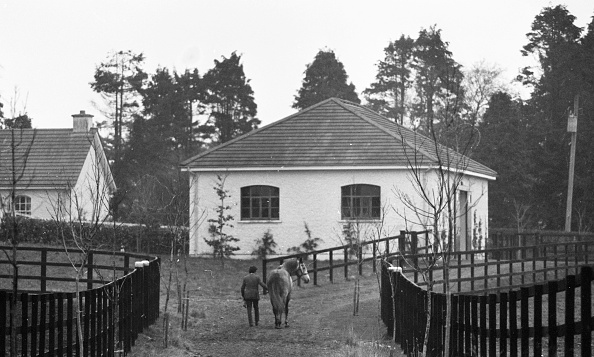
Plans to run in the Arc were shelved and he was retired to the Aga Khan’s Ballymany Stud in Co Kildare amid much fanfare.
Stoute would train five more Derby winners before retiring but acclaims Shergar as the best middle-distance horse he trained. Timeform awarded the colt a rating of 140, making him one of their all-time greats. At that time he was bettered by only six horses sinc the publication’s founding in 1948.
The hope with any stallion is that he will yield versions of himself at any stage over the next two decades or so.
A national treasure in both England and Ireland, Shergar covered 44 mares in 1982, producing 35 foals, and had a full book of 55 for the 1983 breeding season, which traditionally begins around Valentine’s Day.
Tragically, those carefully planned liaisons never happened.
A masked gang kidnapped Shergar on the night of February 8 and demanded a £2 million ransom. The money was not paid and he was never seen again, allegedly killed within days of being snatched. Nobody has ever been brought to book.
It was a desperately tragic end for a horse whose only crime was the thrill of running as fast as his legs would carry him. The Dubai Duty Free Shergar Cup meeting at Ascot, which takes place every August, is named in his honour.
He becomes the 14th horse to be inducted into the Hall Of Fame after Frankel, Brigadier Gerard, Nijinsky, Mill Reef, Dayjur, Dancing Brave, Galileo, Sea The Stars, Stradivarius, Pebbles, Dubai Millennium, Goldikova and Enable.
Career Highlights